-
 (©USM)
USM Modular Furniture
Kanto | Tokyo - Chiyoda Ward
Architecture & Design
A few steps east from Tokyo’s Imperial palace, the three-letter Swiss design company and its iconic furniture line aim to a peaceful cohabitation between style and flexibility.
Designer by necessity
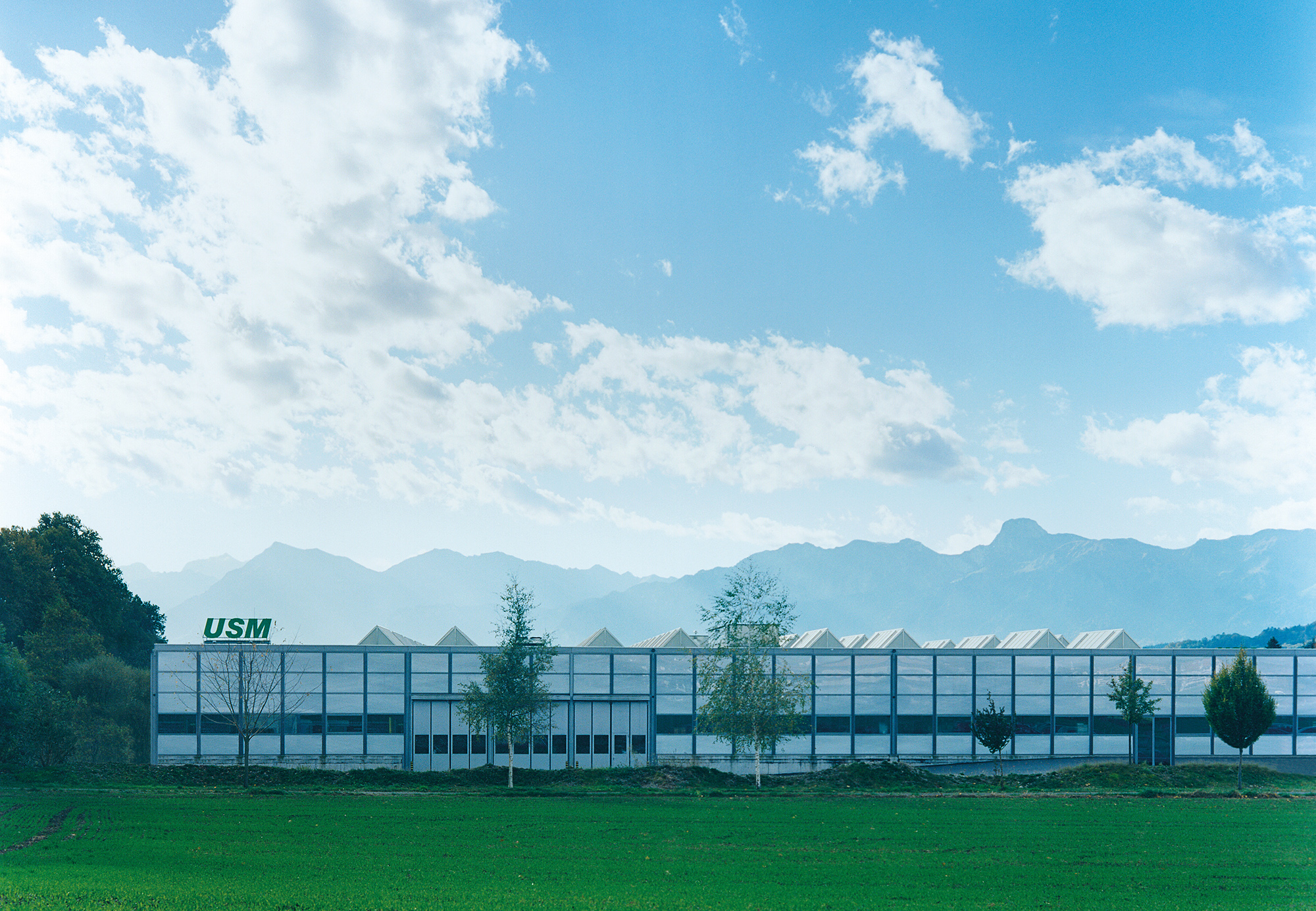
USM Head office and factory in Münsingen, in the Swiss canton of Bern (©USM)
USM is a renowned Swiss manufacturer of modular furniture for the home and office. Founded in 1885 by Ulrich Schaerer in Münsingen as a simple producer of window fitting, ornamental hinges, and other metal works, the company greatly expanded in the late 1940s thanks to the needs of the post-war economy. In 1961, however, Paul Schaerer, grandson of the founder of USM, decided to modernize the company’s production plants, and commissioned Swiss architect Fritz Haller to conceive a modern building to accommodate the spatial needs of the firms’ plant and administration. To do so, Haller created a flexible modular metal-framed construction system.
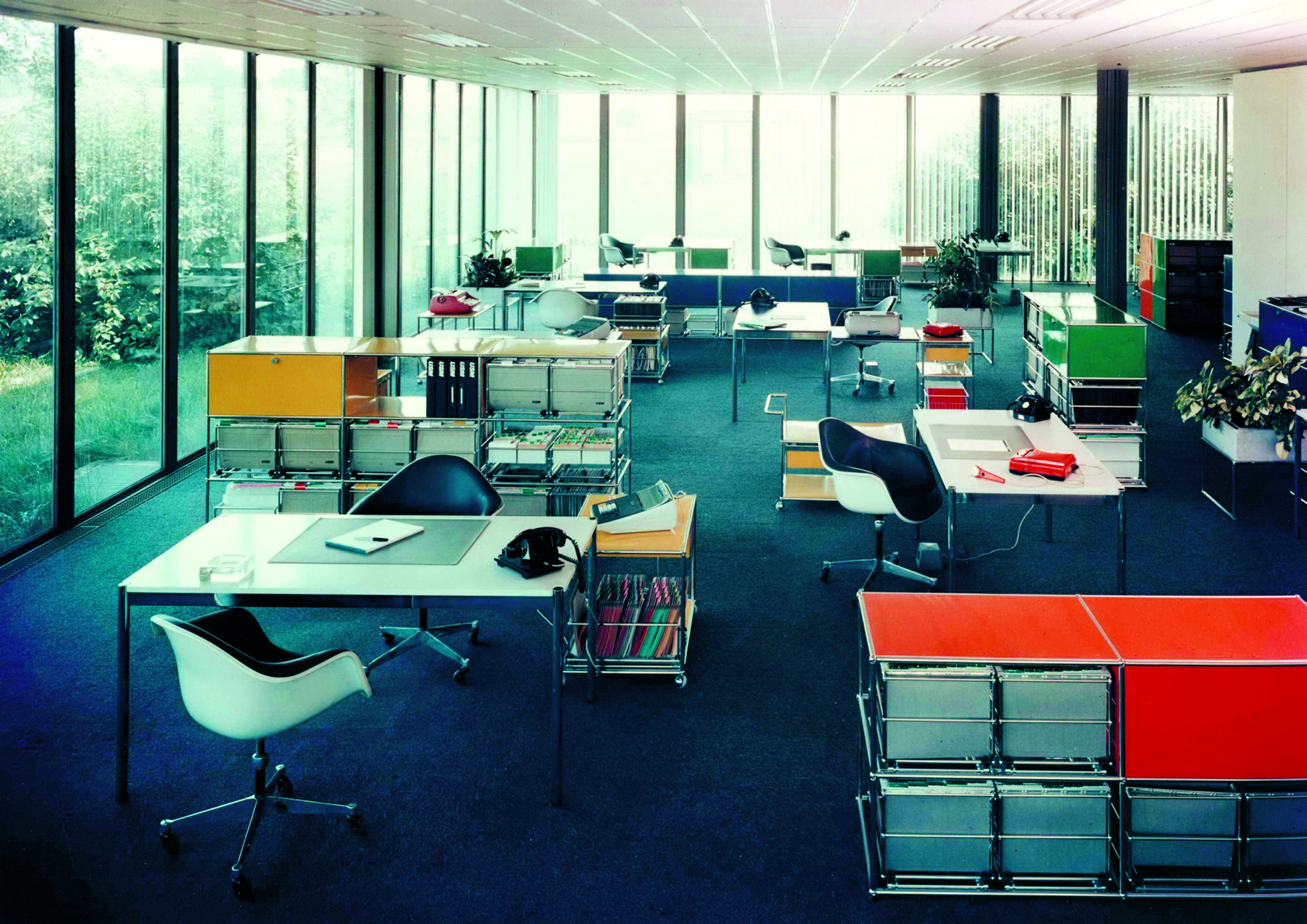
USM Head office in 1965 (©USM)
Two years later, in 1963, facing his inability to find suitable furniture for his open-plan offices, Schaerer contacted Haller again to offer him to collaborate on a brand new furniture concept using the same modular method. The architect handled the design while the businessman took care of engineering, and soon was born the signature USM Haller system, which became such a success beyond the firm’s offices that USM eventually adopted furniture-making as its core business!
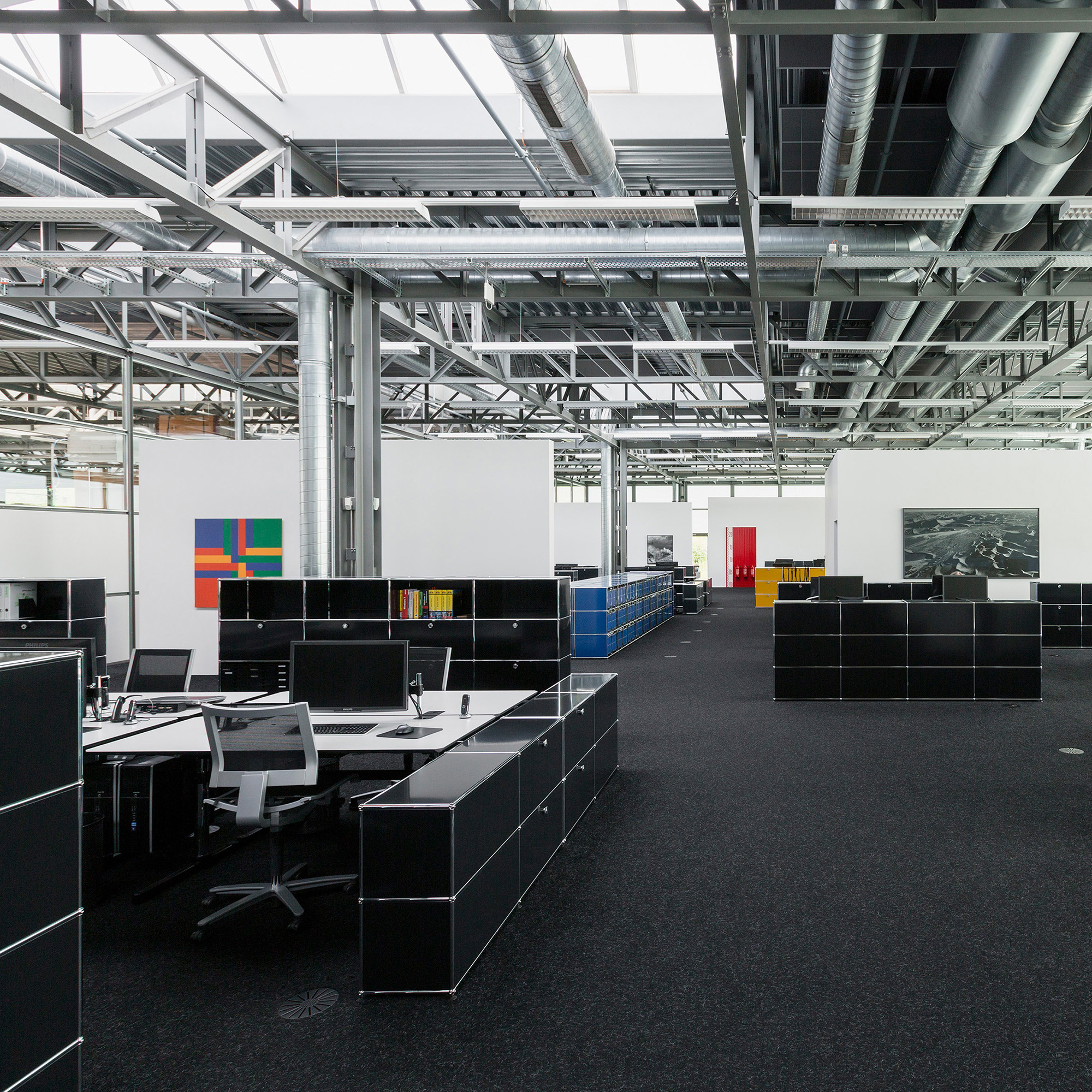
(©USM)
Exported and locally processed
Nowadays, USM modular furniture is currently being exported to more than 40 countries around the world. Its international sales network and service network are supported by partnership with over 410 authorized distributors. The USM Haller line is widely celebrated as a design classic and is even part of the permanent collection of New York’s Museum of Modern Art and Cooper-Hewett National Design Museum. Directly-owned showrooms, in which professional staff use 3D simulation to design furniture according to customer's request and create quotation, are located in many global cities, including Tokyo!
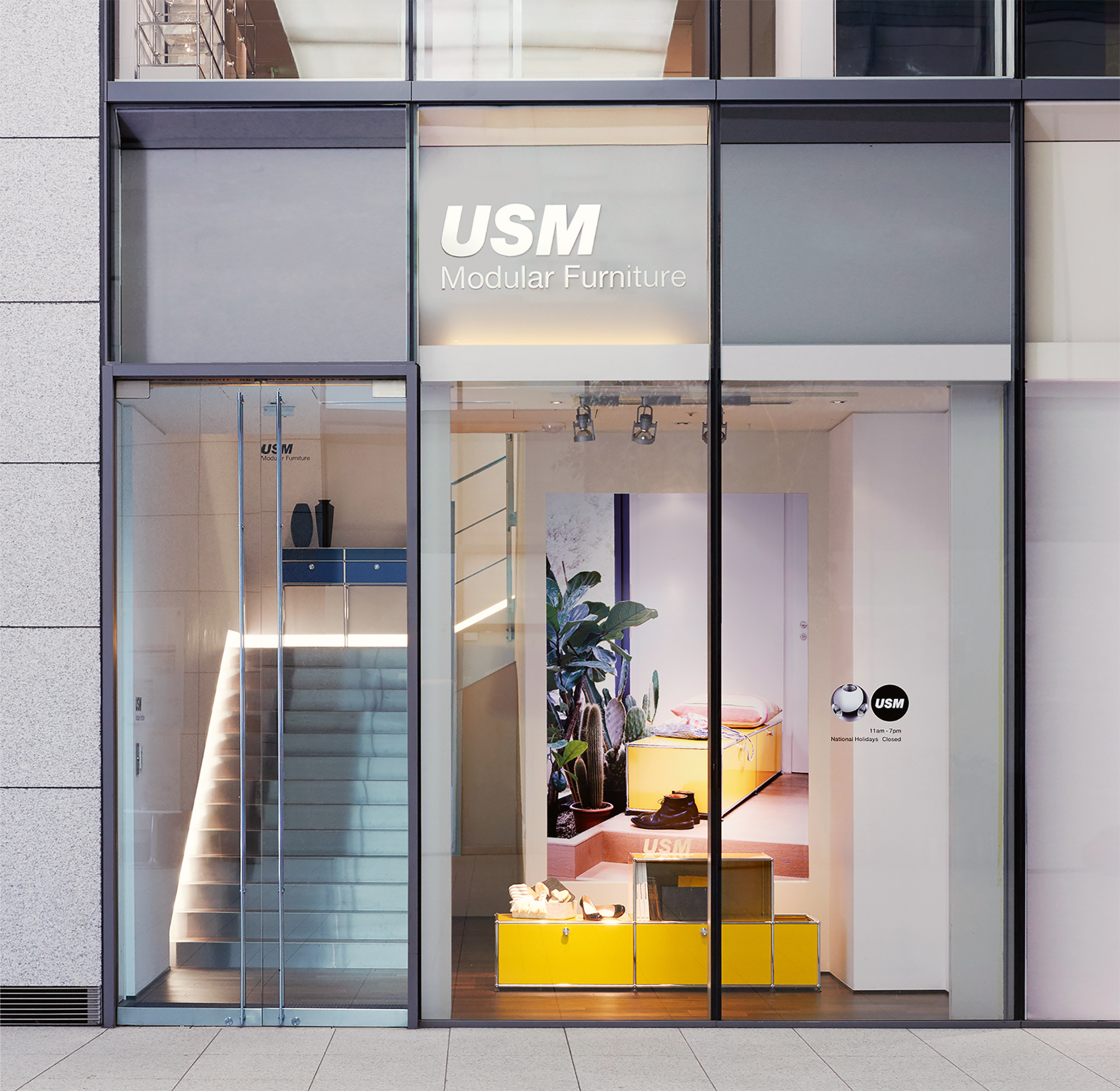
USM Showroom in Marunouchi (©USM)
Although sales in Japan started over 30 years ago and mostly involved Swiss and German customers and companies, the share of Japanese office and home users has been steadily increasing in recent times. USM established its first wholly owned subsidiary in Japan in 2008, and opened its signature showroom in Marunouchi in 2009. Nowadays, USM distribution has expanded to more than 30 retail furniture shops nationwide, from Kyushu to Hokkaido.
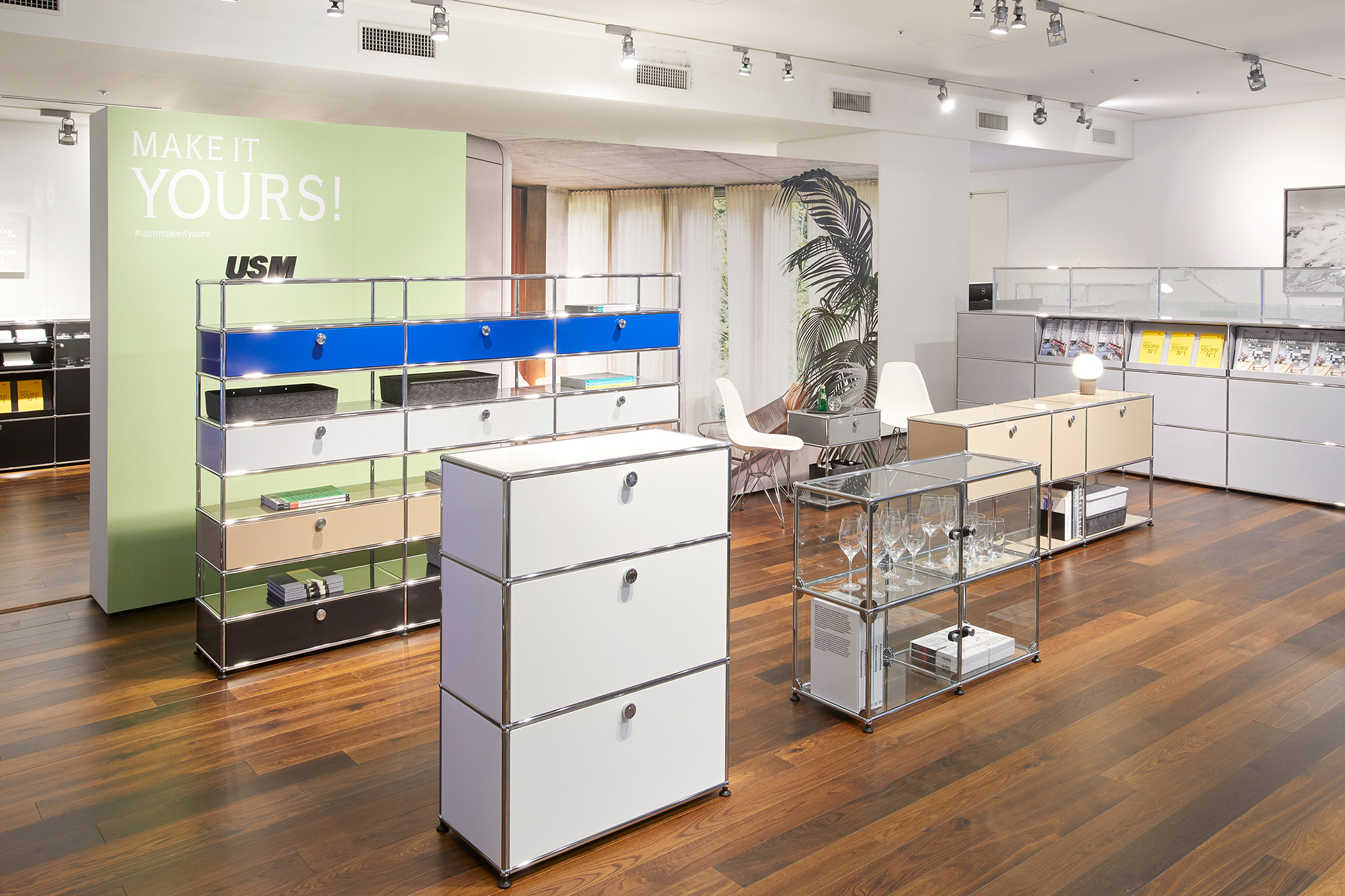
USM Showroom in Marunouchi (©USM)
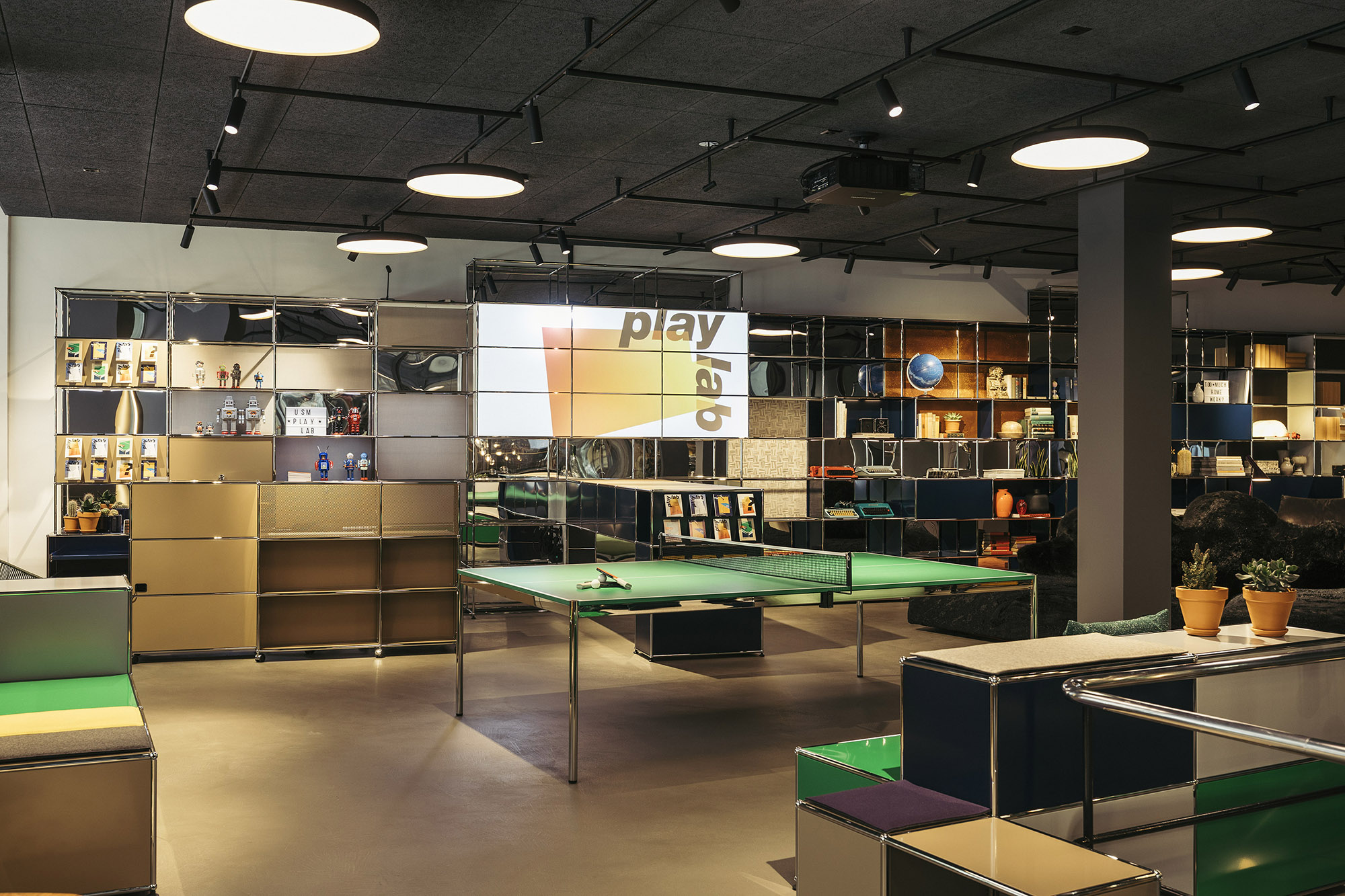
USM Showroom in Bern (©USM)
Believe it or not, USM has not only enjoyed good business, but some of its production has also been influenced by Japan! Indeed, the USM Haller system received a special modification to accommodate the Japanese environment: a “latch function”. Developed in response to the 1995 Great Hanshin-Awaji Earthquake, Japanese models were redesigned to include a small clasp for door panels to prevent them from opening in case of a strong tremor. These models have since been made available at USM stores and retailers all around the world, and contribute to the security of all USM users!
A signature model of Swiss standard
(©USM)
(©USM)
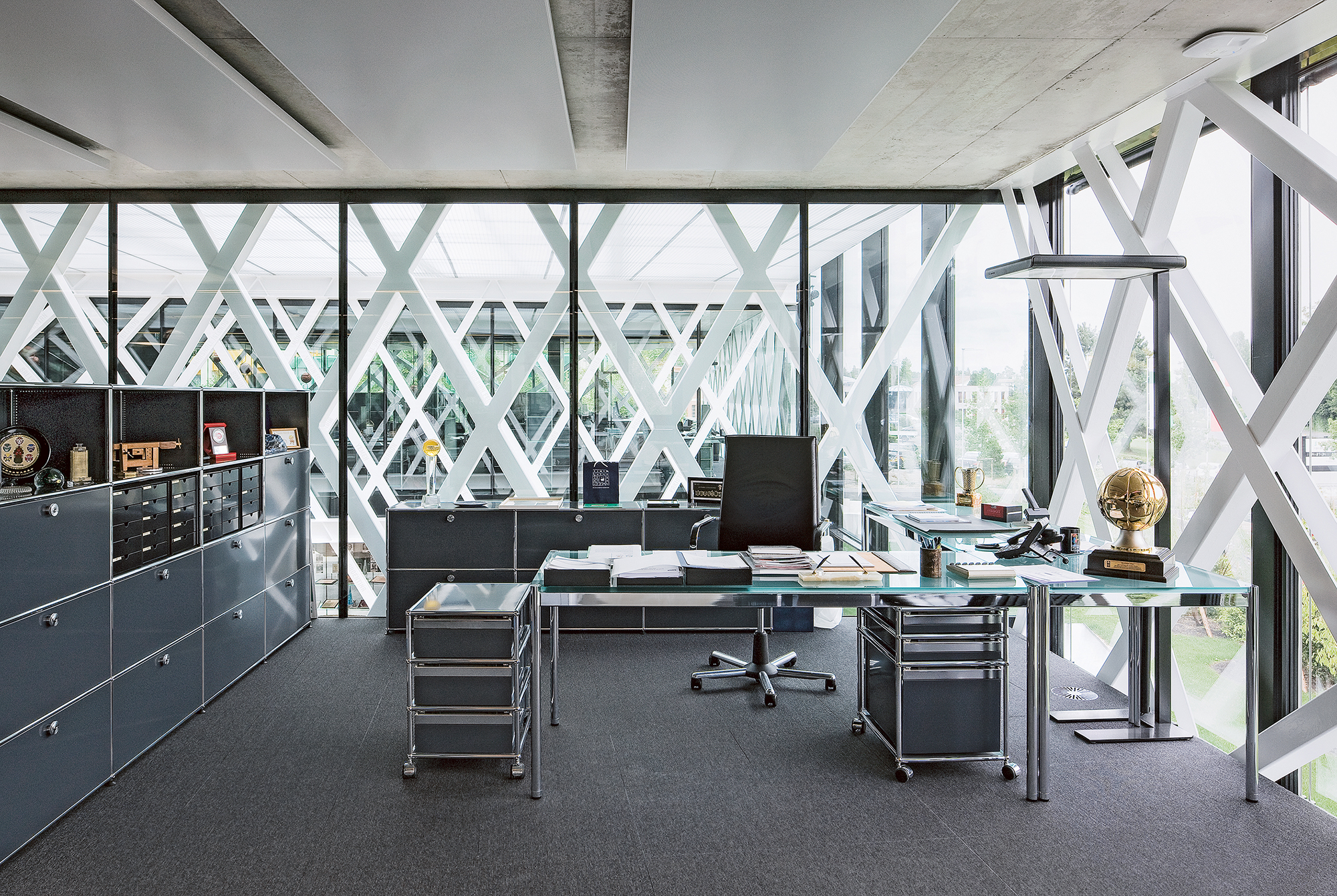
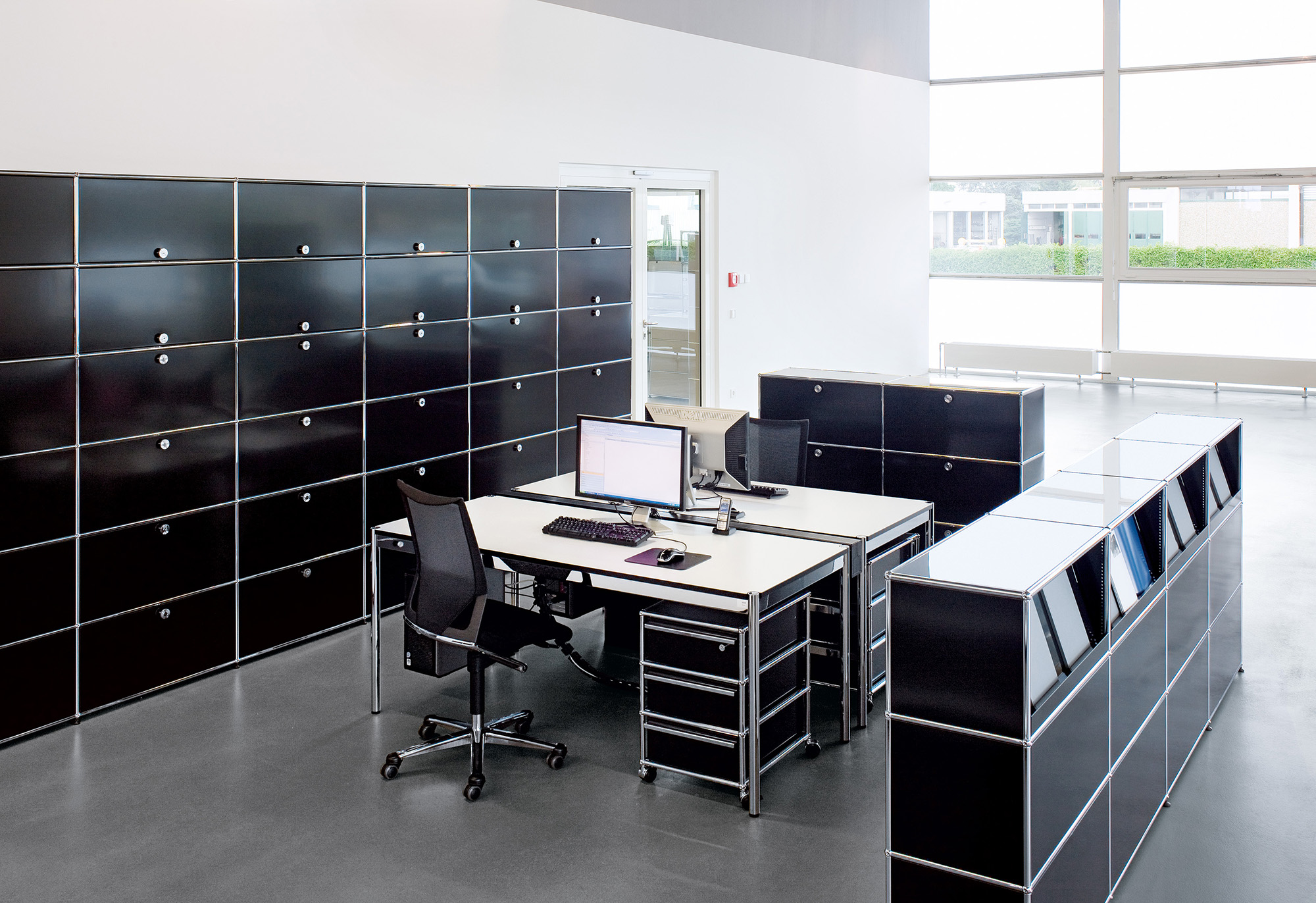
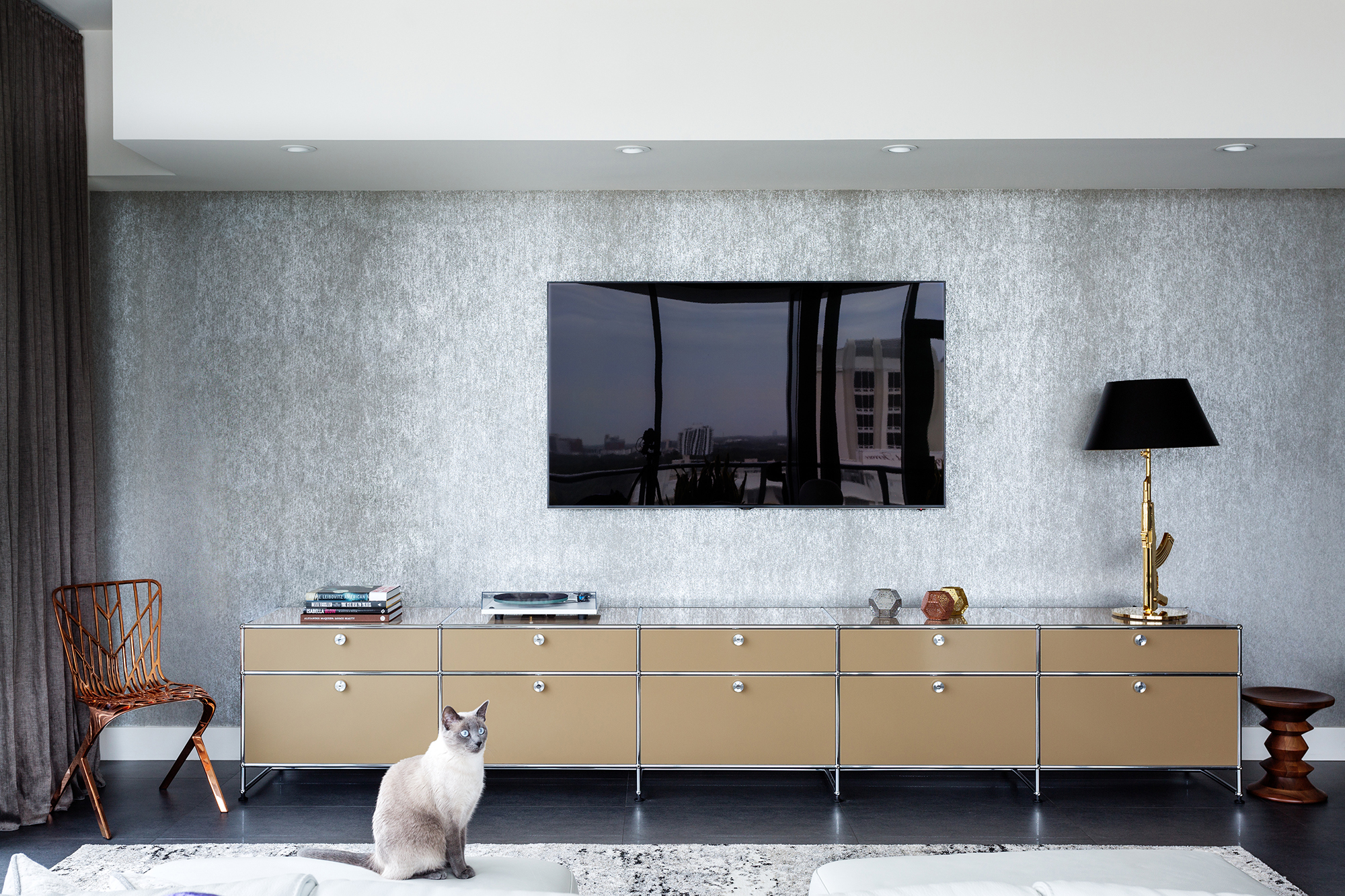
The USM Haller line, along with other ranges of tables and accessories, shows recurrent core values in classic Swiss design: innovation, quality, flexibility, durability, and timelessness. Its elegant proportions and minimalist design are based on the idea that form follows function: each furniture is created to be appropriate for both home and office environments and assimilate with any architectural or interior design.

The USM Haller system (©USM)
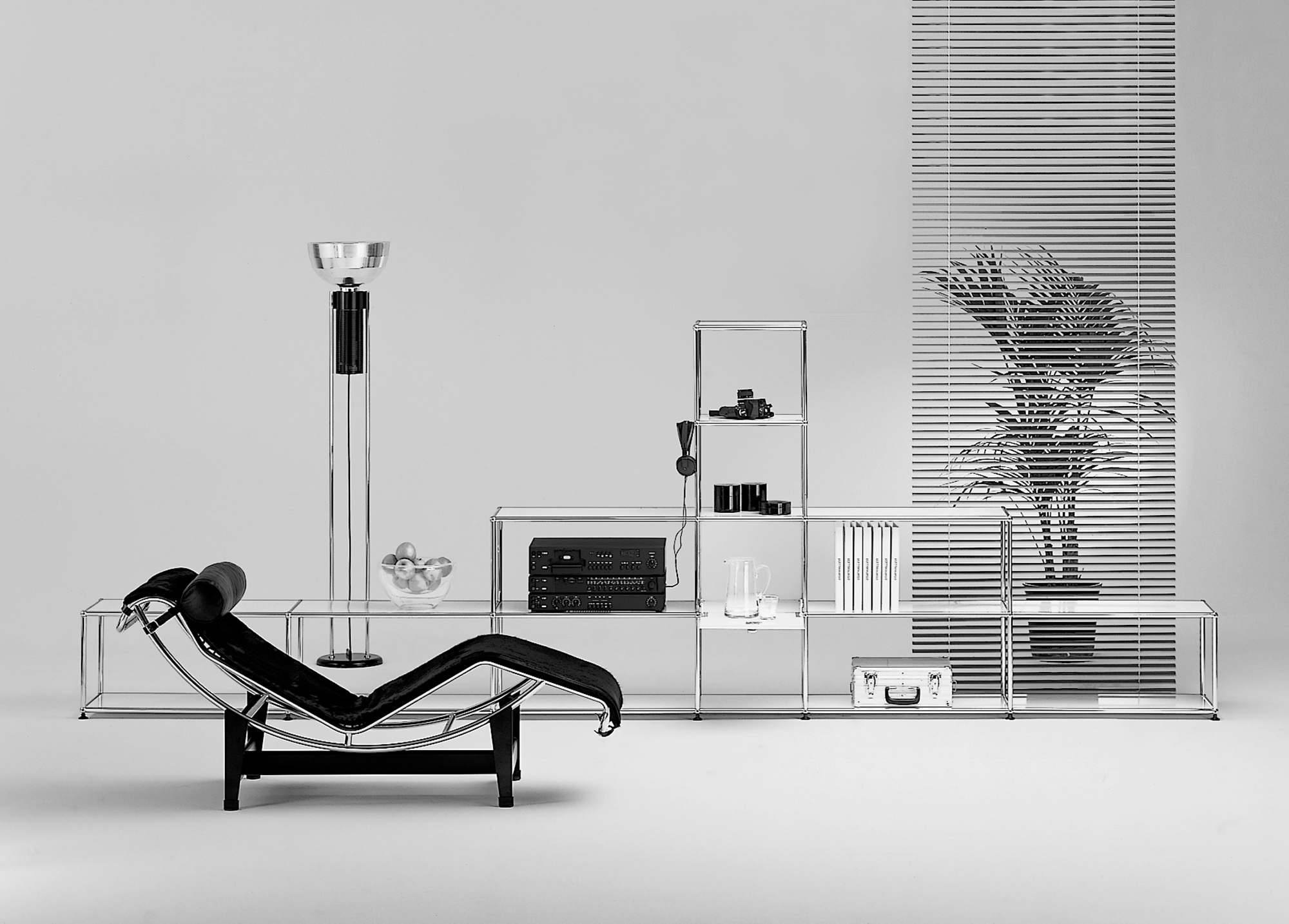
The concept of the USM Haller system is a modular freestanding desk and storage solution for the office or home. The tables are offered in standard shapes, sizes and finishes that can be accessorized with equipment for modern technology including: swing arms for telephones, monitors and computers, paper and wire management organizers. The frame being based on and constructed with three basic elements (panels, connecting tubes, and balls), it can be built in any direction, taken apart and reconfigured for changing requirements. The furniture units can be further customized per application by adding doors, drawers and a variety of internal organizational accessories!
(©USM)
(©USM)